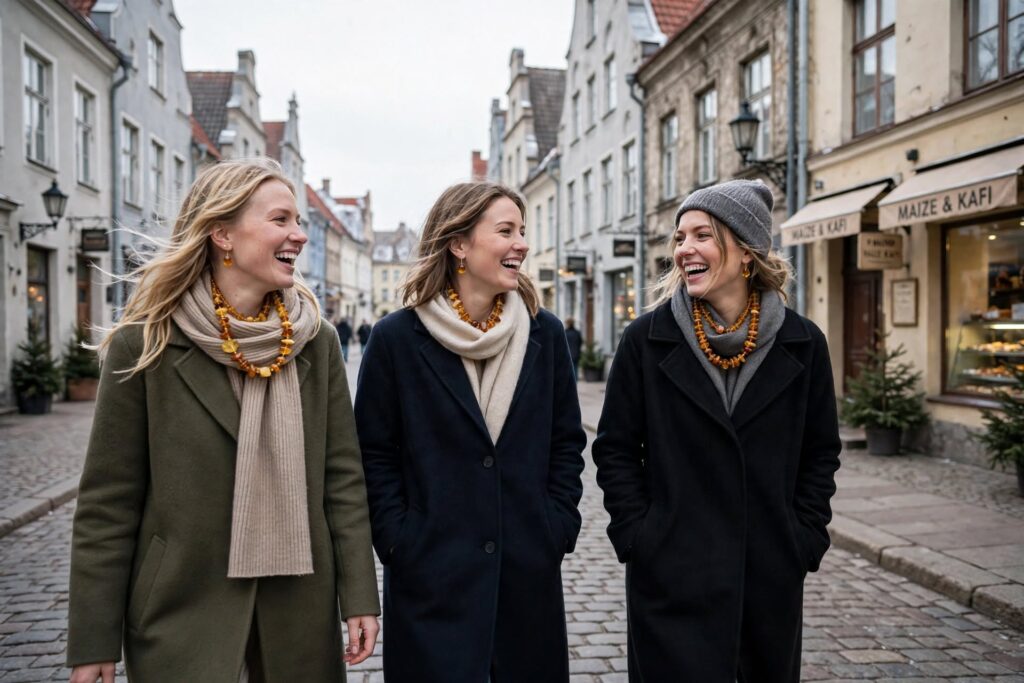
The Baltic states — Estonia, Latvia, and Lithuania — tend to get folded into whichever broader category is most convenient: sometimes “Scandinavian” because of their geographic proximity and relative economic development, sometimes “Eastern European” because of their Soviet past. Neither fits particularly well. Baltic women reflect this in-between quality: they are cooler in initial social contact than most Eastern European women, more direct than most Western European women, and possess a specific combination of intellectual seriousness and dry pragmatism that tends to surprise Western men who arrive with preformed expectations.
The three countries are not the same country
This sounds obvious but tends to get ignored. Estonian, Latvian, and Lithuanian are three entirely different languages from three entirely different language families — Estonian and Finnish are related; Lithuanian and Latvian are Baltic Indo-European; none of them are Slavic. The cultures differ in measurable ways. Estonians have the most pronounced Scandinavian cultural influence, partly through historical ties with Finland and Sweden. Lithuanians have the strongest Catholic influence and the closest historical ties to Poland. Latvians sit somewhere between, with a significant Russian-speaking minority that adds its own dimension.
When you are talking to a specific Baltic woman, knowing which country she is from and having some genuine familiarity with that specific country — not just “the Baltics” — matters. It signals that you see her as a person from a specific place rather than a representative of a regional category.
What Baltic women are actually like
Reserved in early contact. This is probably the most consistent characteristic across all three countries and the one that Western men find most disorienting when they arrive expecting the warmth of Ukrainian or Romanian women. Baltic social culture is not cold — it is simply slower to open than many other European cultures. The reserve is not disinterest; it is a feature of a trust-building process that takes more time than most Western men are used to. Once it breaks, it breaks fully — Baltic women tend to be deeply loyal and genuinely warm with people they have decided to trust.
Highly educated. The Baltic states have some of the highest literacy and university graduation rates in the world. Baltic women are frequently multilingual — English proficiency is extremely high in Estonia and Latvia, somewhat lower but still substantial in Lithuania — and intellectually engaged in ways that show up very quickly in conversation. Superficial conversation tends to go nowhere. Genuine intellectual exchange tends to go very far.
Practical and direct. Baltic communication culture is on the more direct end of the European spectrum. Indirect hinting and social performance tend to be read as either dishonesty or incompetence. A man who says what he thinks, means what he says, and follows through on what he commits to tends to do very well. A man who hedges everything and manages impressions tends to do very poorly.
Dating expectations: what to know
Baltic women generally expect men to take initiative in early dating — to suggest specific plans, to make reservations, to pay for the first date. That said, this expectation sits alongside a much stronger gender egalitarianism than you would find in most of Eastern Europe. Baltic women are professionally ambitious and economically independent, and the expectation of masculine initiative in courtship coexists with a genuine assumption of equality in partnership.
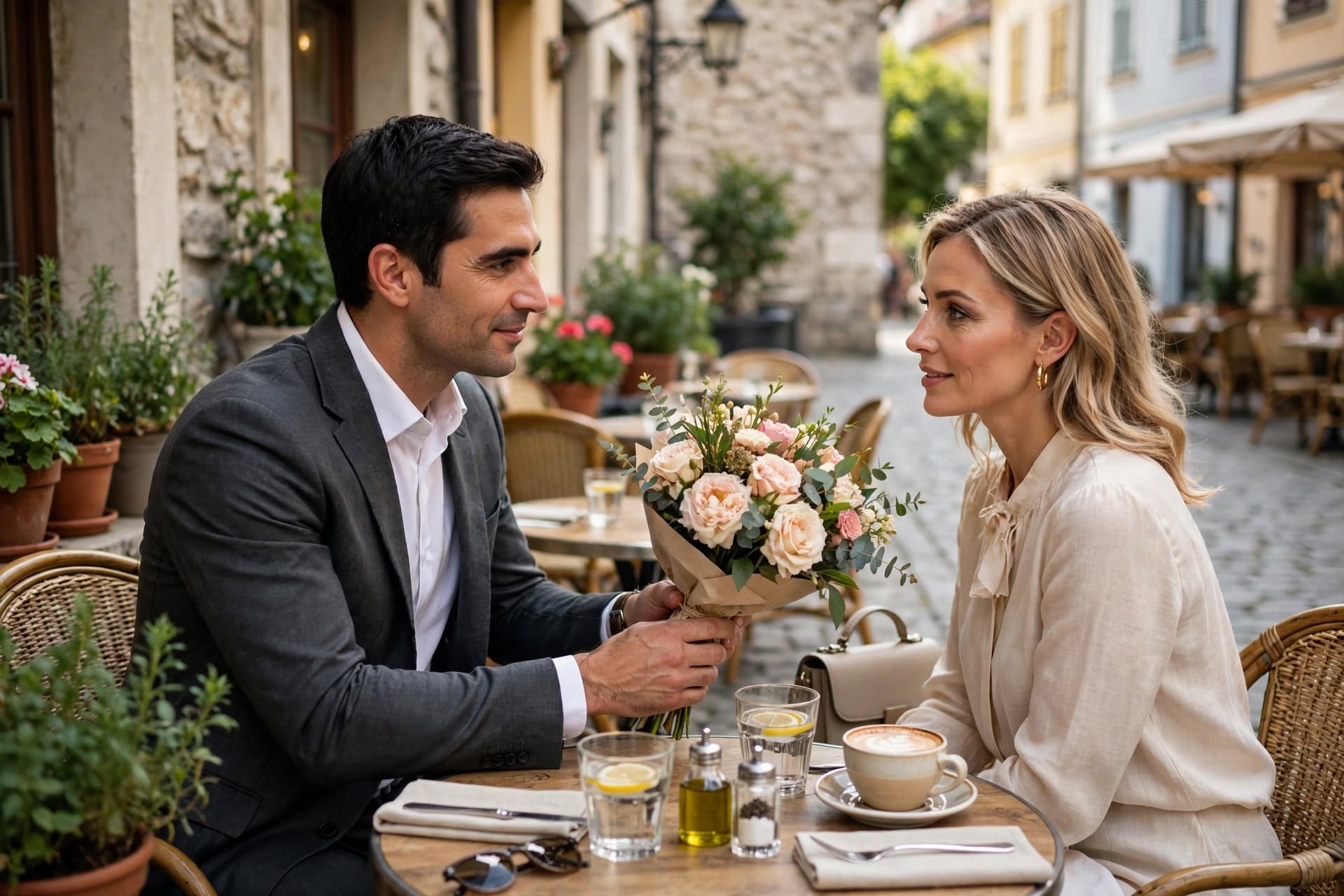
Flowers are appropriate on a first date, though the expectation is slightly less absolute than in Ukrainian or Polish culture. What is genuinely non-negotiable is effort — showing up prepared, having thought about what you are doing and where you are going, demonstrating that the occasion matters to you. The appearance of indifference tends to be fatal very quickly in Baltic dating contexts.
Humor matters. Baltic humor tends to be dry, self-deprecating, and occasionally very dark — particularly in Estonia, where it has something in common with Finnish humor. Men who can match this register tend to build rapport much faster than those who cannot. Men who are confused by it tend to struggle.
Visa and practical considerations
All three Baltic states are EU members and NATO members. Baltic passport holders have full freedom of movement within the EU and can visit the United States under the Visa Waiver Program. The immigration pathway for an American man bringing a Baltic woman to the United States is considerably more straightforward than for women from non-EU countries. The K-1 fiancée visa process applies and does not currently carry the additional complications that affect Russian and Ukrainian nationals.
Latvia has a notable Russian-speaking minority — roughly a quarter of the population — and Latvian women with Russian heritage may carry some of the cultural characteristics more commonly associated with Russian women alongside specifically Latvian ones. This is worth knowing because it explains variation within Latvia that can be confusing if you are expecting a uniform “Baltic” cultural experience.