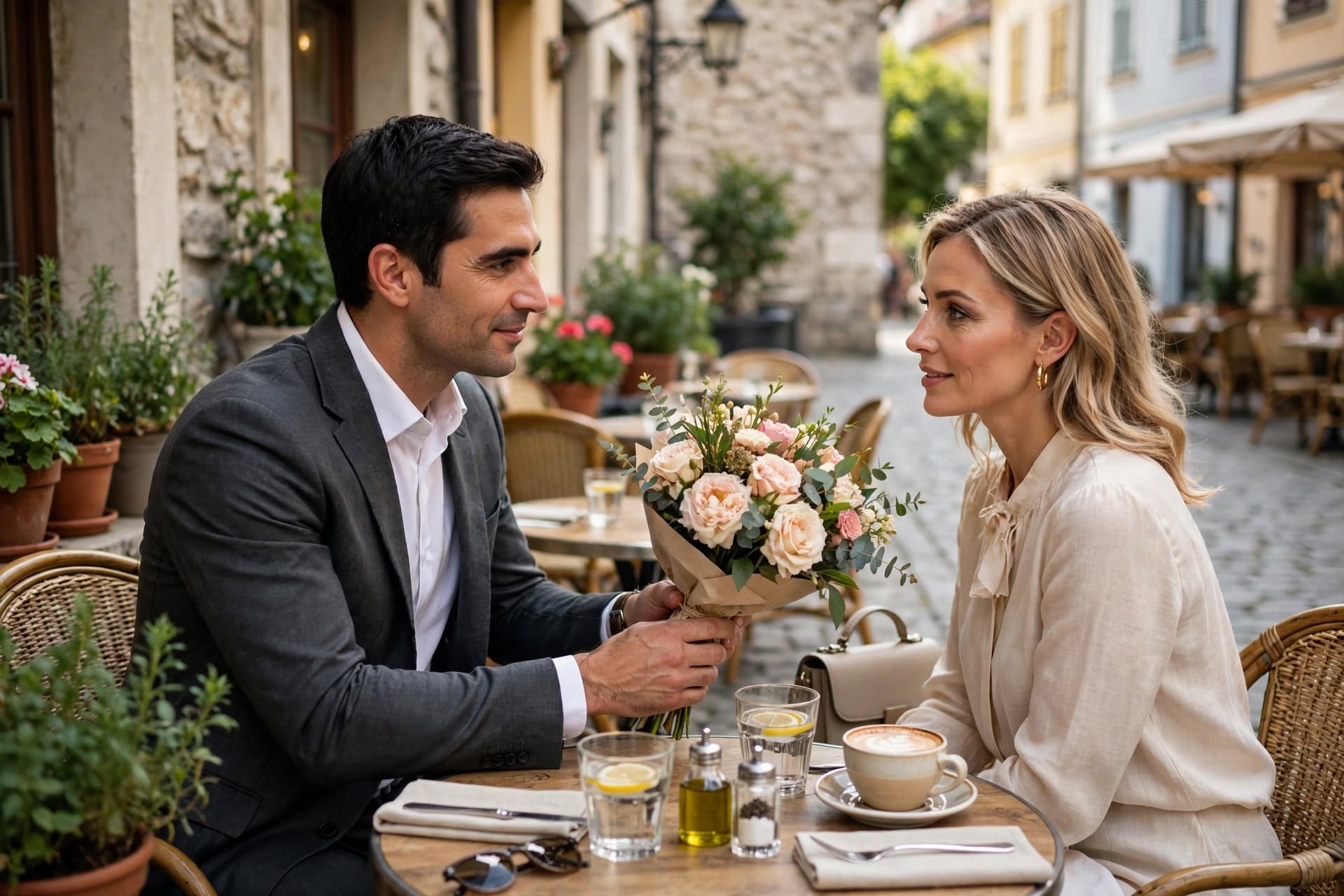
Most first messages on international dating platforms get ignored. Not because the sender is uninteresting, but because the message could have been sent to anyone. “Hi, I like your profile, you seem interesting” is not a message — it is a placeholder. European women who are actively dating online receive variations of it constantly, and they can spot the copy-paste within the first three words.
The fix is not complicated. It just requires actually reading her profile.
The one thing that separates responses from silence
Specificity. That is it. A message that references something particular from her profile — not her photos, but something she wrote about her life, her city, her work, or what she is looking for — communicates that you read it. That sounds like a low bar. It is. And most men clear it.
If her profile mentions she teaches secondary school in Kraków, ask something genuine about that. If she wrote that she spent last summer hiking in the Tatras, mention it. If she listed Dostoevsky as a favorite author and you have actually read him, say so. If you have not, do not fake it — Eastern European women have a remarkably good radar for performed familiarity.
The message does not need to be long. Three to five sentences is enough. One specific reference, one genuine reaction to it, one open question. Done.
What kills a first message before it starts
Leading with appearance. “You are beautiful” is the most common opener on every international dating platform and the one most likely to get no response from women who have been on the platform for more than two weeks. It is not that the compliment is offensive — it is that it tells her nothing about you and everything about the fact that you looked at the photos and stopped there.
Generic openers also signal low effort in a context where effort signals genuine interest. Women from Poland, Romania, Ukraine, and the Czech Republic are generally looking for men who are serious about what they are doing on the platform. A copy-pasted opener communicates that you are not particularly serious.
Asking too much too soon. “Tell me about yourself” as a first message puts all the work on her and gives her nothing to respond to. Questions work when they are specific enough that they can actually be answered. “What is Kraków like in winter — I have always been curious whether the cold makes the old town feel different” is a question. “Tell me about your city” is a task.
Tone: the difference between formal and stiff
European women — particularly from Eastern Europe — tend to appreciate a tone that is warm but not gushing, direct but not blunt. The social register sits somewhere between how you would write to a professional contact you genuinely want to get to know and how you would write to a friend of a friend you just met at a dinner party.
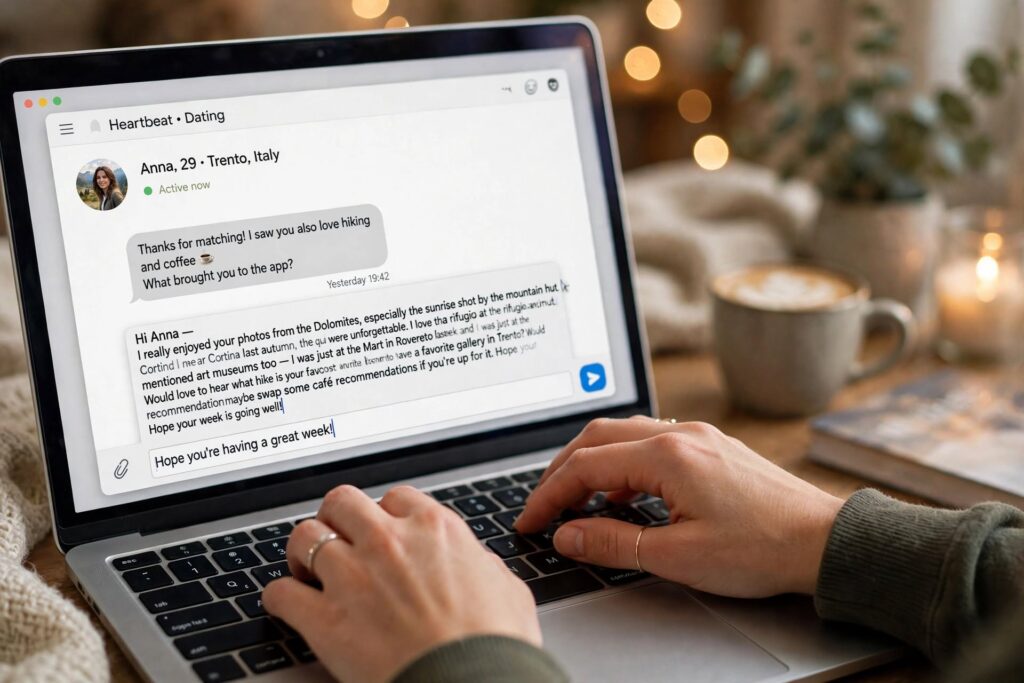
Avoid excessive exclamation points. Avoid emojis in a first message — they read as filler when there is no established rapport. Write in complete sentences. Spell her name correctly if it is in her profile.
One thing that works well and that most men do not do: end the message without pressure. Not “I hope to hear from you soon” (too eager) and not “looking forward to chatting” (presumptuous). Just a question or a comment that invites a response naturally. Let the conversation open rather than demanding it start.
Language: should you try a few words in her language?
Yes, with one condition: only if you actually know what they mean and can pronounce them if it ever comes up on a video call. A single genuine phrase in Polish or Romanian — used correctly, not phonetically mangled — communicates real effort. A botched attempt communicates that you ran something through a translator and pasted it in. Women from these countries can tell the difference.
If you do not know anything in her language, do not fake it. Saying directly that you would like to learn a few words in her language — and meaning it — is more interesting than a poorly transliterated opener.
What to do after she responds
This is where most men lose what the first message gained. She responded. She gave you something. The next message needs to engage with what she actually said, not pivot immediately to asking more questions or talking about yourself. Read her reply carefully. Find the specific thing in it worth responding to. Build from there.
The pattern that works: she says something, you respond to it genuinely and share something parallel from your own life, you ask one follow-up question that comes naturally from what she said. Repeat. This is how a real conversation develops, and it is genuinely different from the interview format that a lot of early online dating communication settles into.
Move toward a video call within the first two weeks of real back-and-forth. Text communication can build connection, but it also allows both people to maintain a managed version of themselves that in-person presence immediately breaks down. A video call is the first real test of whether the connection is what it seemed to be on paper — and you want to take that test before either of you has invested months in something that may not survive it.
A note on platforms and verification
The advice above assumes you are on a platform where the profiles are real. On unverified platforms, a significant proportion of profiles — particularly those with very professional-looking photos and very vague bios — are fraudulent. Reverse image search any profile photo before investing real effort in a message. Request a video call early. If she consistently finds reasons to avoid one, that is the answer.
On well-verified platforms, the women are generally there for the same reasons you are. The first message is not the obstacle — it is the opening. Get it right, and the rest tends to follow.